
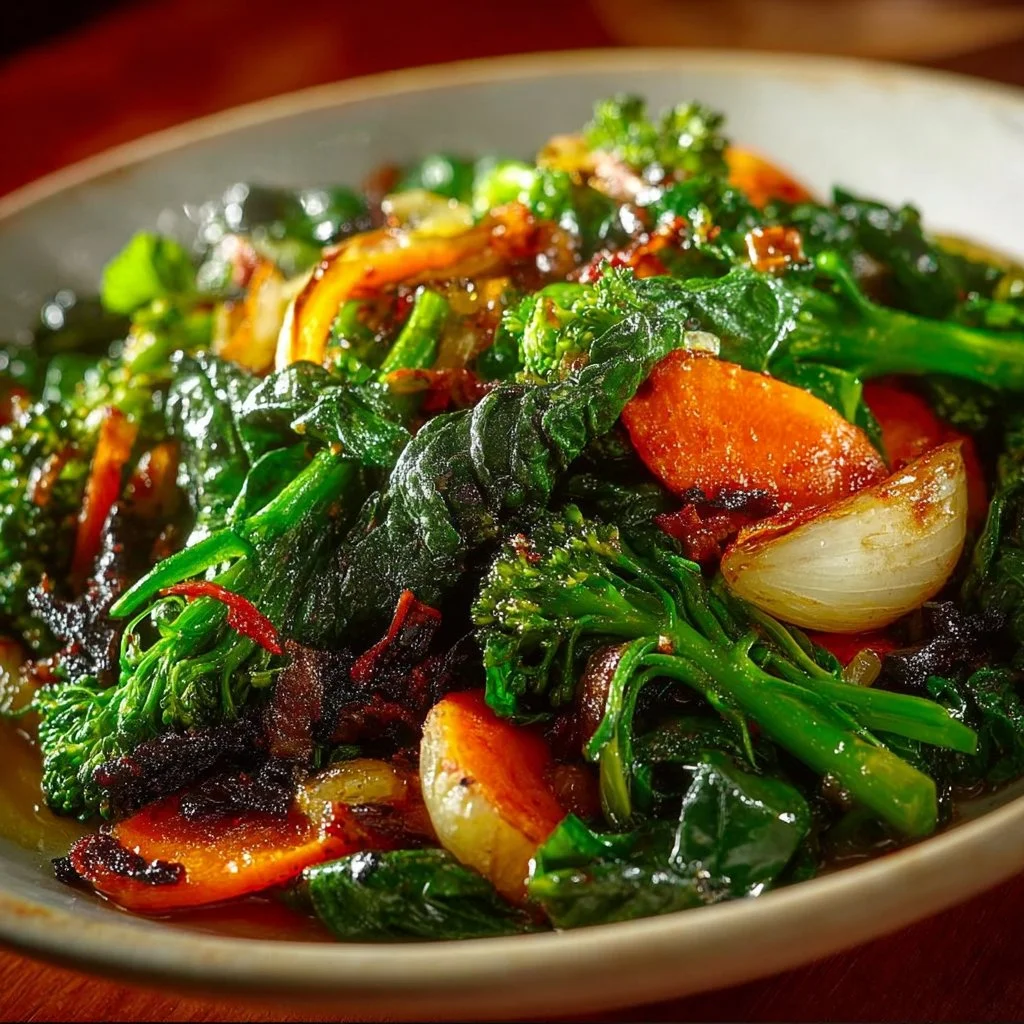
Why Make This Recipe
Healthy sautéed vegetables are a quick and easy way to incorporate more nutrients into your diet. They are colorful, delicious, and can be paired with almost any meal. This dish is not only packed with vitamins but also allows you to use whatever vegetables you have on hand. Plus, it takes just a few minutes to prepare, making it a great choice for busy days.
How to Make Healthy Sautéed Vegetables
Ingredients:
- 2 tbsp olive oil (or avocado oil/butter)
- 2 cloves garlic, minced
- 1 small onion, thinly sliced
- 1 bell pepper, sliced
- 1 zucchini, sliced into half-moons
- 1 cup broccoli florets
- 1 medium carrot, julienned or sliced thin
- ½ cup snap peas
- ½ cup mushrooms, sliced
- Salt and black pepper, to taste
- 1 tsp lemon juice (optional)
- 1 tsp balsamic vinegar or soy sauce (optional)
- Optional toppings: toasted nuts, seeds, fresh herbs, grated Parmesan
Directions:
- Prep all veggies so pieces are even.
- Heat oil in a skillet over medium-high heat.
- Sauté garlic and onion for 1–2 minutes until fragrant.
- Add carrots and broccoli first and cook for 3–4 minutes, stirring.
- Add bell pepper, zucchini, mushrooms, and snap peas; cook another 4–5 minutes until crisp-tender.
- Season with salt, pepper, and optional lemon juice, balsamic vinegar, or soy sauce.
- Toss, garnish, and serve right away for best texture.
How to Serve Healthy Sautéed Vegetables
You can serve healthy sautéed vegetables as a side dish with grilled chicken, fish, or tofu. They can also be added to rice, quinoa, or pasta for a complete meal. For a fun twist, try topping them with toasted nuts, seeds, fresh herbs, or a sprinkle of grated Parmesan cheese.
How to Store Healthy Sautéed Vegetables
If you have leftovers, store the sautéed vegetables in an airtight container in the fridge. They will stay fresh for about 3 to 4 days. Reheat them in a skillet or microwave when you’re ready to eat.
Tips to Make Healthy Sautéed Vegetables
- Use fresh vegetables for the best flavor and texture.
- Cut vegetables into similar sizes to ensure even cooking.
- Don’t overcrowd the pan, as this can lead to steaming instead of sautéing.
- Feel free to experiment with different vegetables based on what you like or have on hand.
Variation
You can switch up the vegetables based on the season or what you have available. For instance, try adding asparagus, kale, or cauliflower. Feel free to experiment with different spices and herbs to customize the flavor!
FAQs
1. Can I use frozen vegetables instead of fresh?
Yes, you can use frozen vegetables, but they may cook faster, so keep an eye on them.
2. Can I add protein to this dish?
Absolutely! You can add cooked chicken, shrimp, or beans for extra protein.
3. Is this dish gluten-free?
Yes, the basic sautéed vegetables are gluten-free, but check the soy sauce or any toppings you use to ensure they are gluten-free as well.